Buying your first home in Dublin can feel exciting and overwhelming at the same time, especially when the city’s newer communities offer so many different home types, price points, and HOA structures. If you are trying to balance budget, commute, and lifestyle, you are not alone. The good news is that Dublin’s newer neighborhoods give first-time buyers more than one path into the market. This guide will help you understand where newer housing is concentrated, what kinds of homes you may find, and how to shop with more confidence. Let’s dive in.
Where Dublin’s newer communities are growing
Much of Dublin’s newer housing is concentrated in eastern and transit-oriented parts of the city. The City of Dublin’s Eastern Dublin Specific Plan covers about 3,300 acres east of Camp Parks, and city planning encourages a mix of housing types in that area.
City planning documents also support higher-density and mixed-use development near major transit lines and around the Dublin/Pleasanton BART station. That pattern has helped shape newer neighborhoods that appeal to buyers who want newer construction, easier commuting options, and access to retail and public spaces.
The city’s Housing Element describes Eastern Dublin as a place where both detached and attached housing types are planned. Higher-density housing is generally concentrated in flatter areas, which helps explain why you will see a wider range of townhomes, duets, and mixed-use projects in parts of newer Dublin.
One example in the city’s development pipeline is Dublin Centre, a mixed-use project planned with housing, retail, a public park, and a community center. For a first-time buyer, that matters because newer communities in Dublin are often designed around convenience and shared amenities, not just individual homes.
Why newer Dublin appeals to first-time buyers
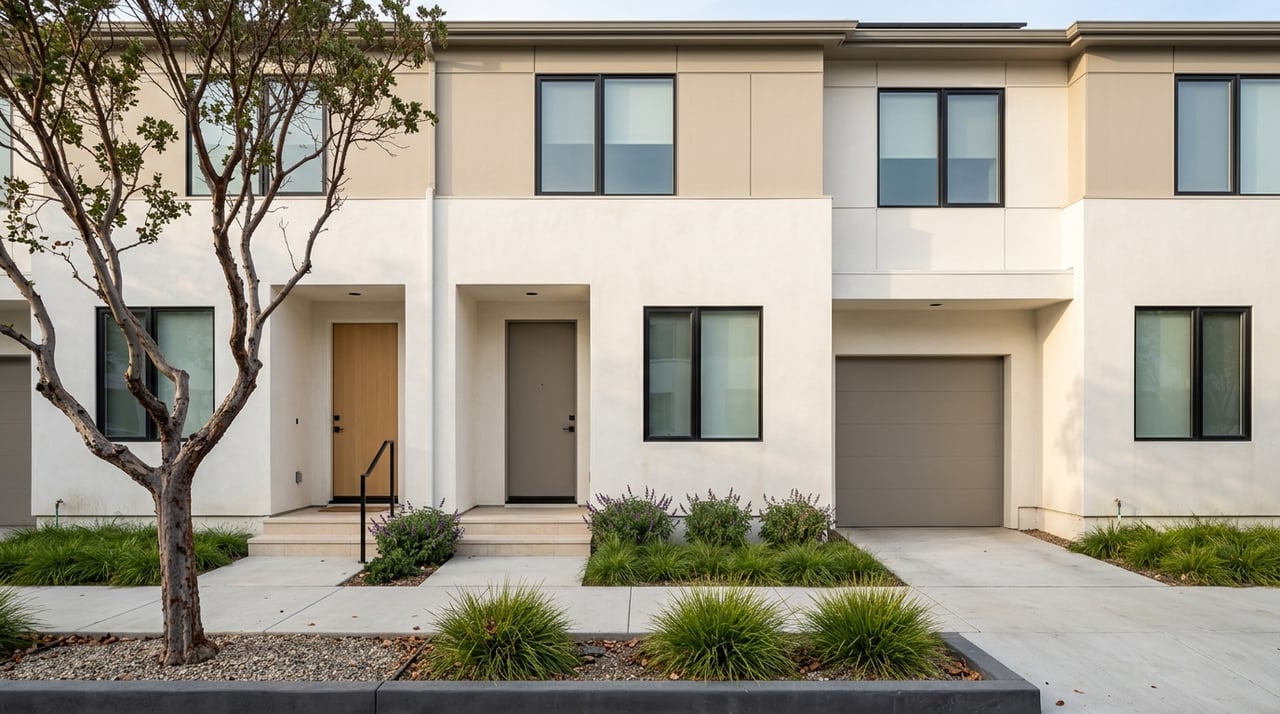
For many first-time buyers, the biggest advantage of newer Dublin is choice. You may find attached homes at a more accessible price point than detached single-family homes, while still getting newer layouts, updated finishes, and locations tied to major transit and community amenities.
Bay East market data from June 2026 shows a clear split between attached and detached homes in Dublin. Attached homes had a median sale price of $845,000, spent about 39 days on market, and sold for 99% of list price. Detached single-family homes had a median sale price of $1.505 million, spent about 19 days on market, and sold for 101% of list price.
That gap is important if you are buying your first home. Townhomes, duets, and other attached homes may offer a more realistic entry point, while detached homes often fall into a move-up price range.
What home types you may see
Dublin’s newer communities often include a mix of attached and detached housing in the same master-planned area. That can be helpful if you want to compare different ownership styles without leaving the same general neighborhood.
Francis Ranch is a strong example of that product mix. The community includes four neighborhoods: Azure, Jasmine, Marigold, and Orchid. Current offerings range from attached duets and three-story townhomes to larger detached single-family homes.
In the Jasmine neighborhood, for example, homes are marketed as townhome duets and three-story townhomes ranging from about 1,921 to 2,071 square feet. Detached homes in the same broader community range much larger, from roughly 2,470 to 4,845 square feet.
For a first-time buyer, this kind of mix can make it easier to focus on priorities. You may decide that shared walls are worth it for a newer home and a lower entry price, or you may decide to wait if your goal is a larger detached property.
HOA fees matter more than you think
In many of Dublin’s newer communities, HOA governance is part of the package. That is especially common in master-planned neighborhoods where shared spaces and private infrastructure need ongoing maintenance.
The California Attorney General notes that most California HOAs are nonprofit mutual benefit corporations. In practical terms, that means your monthly dues may support more than a pool or a clubhouse.
City materials for Wallis Ranch show how this can work in real life. Some open-space parcels, neighborhood parks, landscape areas, trails, and private streets may be owned or maintained by the master HOA, while some streets or land are city-owned or held by other entities.
That is why it is so important to ask what the HOA fee actually covers. In newer Dublin communities, dues may help maintain landscaping, trails, parks, private streets, or other shared features that shape your day-to-day experience.
Questions to ask about an HOA
Before you commit to an attached home or condo-style purchase, ask clear questions such as:
- What does the monthly HOA fee cover?
- Is exterior maintenance included?
- Are any utilities included?
- Is parking assigned, deeded, or shared?
- Are there private streets or shared amenities maintained by the HOA?
- Will you receive time to review project documents after your offer is accepted?
Fannie Mae advises buyers in condo-style or lender-reviewed projects to confirm what the HOA fee covers, whether parking is included, and how much time they will have to review project documents once an offer is accepted. The California Department of Real Estate also advises buyers to read all transaction documents and understand disclosures, special taxes, and assessments before committing.
Why BART access shapes demand
Commute convenience plays a big role in newer Dublin neighborhoods. The city is served by two BART stations: Dublin/Pleasanton and West Dublin/Pleasanton.
According to the city’s downtown page, the Dublin/Pleasanton station helped spur higher-density, mixed-use development. The city also says newer transit-oriented projects such as Aster and Connolly Station have attracted young commuters.
For you as a buyer, that means location is not only about the home itself. Access to BART, major roads, and nearby retail can shape how practical the home feels during the workweek and how broadly appealing it may be to future buyers.
There is no formal pricing study in the research here that says BART access guarantees a higher sale price. Still, the city’s planning pattern supports a reasonable conclusion: homes with easier access to transit and daily conveniences often draw strong interest in Dublin’s newer submarkets.
Parks add to daily livability
Newer communities in Dublin are also tied to major public amenities, and Emerald Glen Park stands out. For many buyers, this is one of the anchors that makes East Dublin feel especially livable.
Emerald Glen Park spans 48.2 acres and includes The Wave aquatic center, a skate park, sports fields, lighted tennis and basketball courts, picnic areas, trail access, public art, and an amphitheater that hosts city events. That is a wide range of everyday-use amenities in one place.
A park does not automatically raise a home’s value. But when you combine access to a major park with access to BART and newer mixed-use development, you get a lifestyle package that can appeal to a wide range of buyers.
How to budget for newer Dublin homes
If you are buying your first home, your target budget should reflect more than the purchase price. In Dublin’s newer communities, your monthly payment may include principal, interest, property taxes, insurance, and HOA dues.
This is one reason attached homes can be both appealing and complex. The purchase price may be lower than a detached home, but monthly HOA costs can affect affordability, so it is important to run the full payment before deciding what feels comfortable.
Bay East’s June 2026 data also shows why you should compare submarkets carefully. Not all new homes in Dublin behave the same way, and attached versus detached is one of the clearest dividing lines in pricing and market pace.
Start with a strong preapproval
A solid preapproval is one of the smartest first steps you can take. It helps you understand your price range before you start touring homes, and it can make your offer stronger when you find the right property.
The CFPB advises buyers to ask at least three lenders for preapproval when shopping for a mortgage. Its homebuying materials also explain that preapproval and loan estimates help you set a realistic price target early in the process.
Fannie Mae also notes that your offer strategy may include decisions about contingencies, such as inspection and financing approval. In a market where different home types move at different speeds, being prepared can help you respond with more confidence.
First-time buyer help in Dublin
Local assistance can make a meaningful difference. The City of Dublin offers a First Time Homebuyer Loan Program for income-qualified first-time buyers purchasing in Dublin.
According to the city, the program provides a deferred loan of up to 20% of the purchase price, with a maximum of $100,000. It carries 3% simple interest and a 30-year deferred payment term.
The city says the program can be used for both market-rate and below-market-rate homes. It also requires a minimum 3% down payment and a conforming 30-year fixed primary loan.
The City of Dublin Housing Division also lists homebuyer education resources. CalHFA says first-time buyers using its programs must complete homebuyer education and may also be able to access down payment assistance options.
A newer-community affordability path
Dublin also has below-market-rate ownership opportunities tied to newer communities. The city’s Francis Ranch below-market-rate program states that 18 moderate-income homes will be available between 2025 and 2027.
Those homes include 14 three-bedroom duets and 4 four-bedroom townhomes. The city says applicants must submit a prequalification application, lender preapproval, and preference-point documentation if applicable.
If you think you may qualify, it is worth paying close attention to city program requirements and timelines. These opportunities can create a path into newer Dublin housing that might otherwise feel out of reach.
A practical checklist for attached homes
If you are considering a townhome, duet, or condo-style home in newer Dublin, keep your due diligence simple and focused. A few early questions can help you avoid surprises later.
Use this checklist as a starting point:
- Confirm your full monthly payment, including HOA dues
- Ask exactly what the HOA fee covers
- Verify parking arrangements early
- Clarify who handles exterior maintenance
- Ask whether the home is part of a lender-reviewed project
- Review disclosures, special taxes, and assessments carefully before removing contingencies
These steps matter in any HOA-governed purchase, but they are especially important in newer Dublin neighborhoods where master plans, private streets, and shared amenities are common.
How to shop smarter in Dublin’s newer communities
The best first-home strategy in Dublin usually starts with clarity. Know whether your top priority is price, commute, square footage, or access to amenities.
If budget is your main concern, attached homes may offer the most realistic entry point based on current market data. If commute convenience matters most, you may want to focus on areas with easier access to Dublin/Pleasanton or West Dublin/Pleasanton BART.
If lifestyle is a major factor, look closely at how each community connects to parks, trails, retail, and shared spaces. And if you are comparing multiple newer neighborhoods, do not assume the same HOA structure, monthly cost, or ownership setup applies to all of them.
Buying your first home is a big step, but it becomes much more manageable when you break the process into clear decisions. In Dublin’s newer communities, the right fit often comes down to matching your budget and daily routine with the kind of home and neighborhood structure that works best for you.
If you want experienced, hands-on guidance as you compare Dublin’s newer communities and weigh your best next move, connect with Joujou Chawla. You will get thoughtful advice, local market perspective, and a polished process from start to finish.
FAQs
What types of first homes are common in Dublin’s newer communities?
- In newer parts of Dublin, you will often find attached homes such as townhomes and duets, along with some detached single-family homes in master-planned neighborhoods.
What is the price difference between attached and detached homes in Dublin?
- Bay East reported that in June 2026, attached homes in Dublin had a median sale price of $845,000, while detached single-family homes had a median sale price of $1.505 million.
What should first-time buyers in Dublin ask about HOA fees?
- You should ask what the HOA fee covers, whether exterior maintenance or parking is included, and whether the community maintains amenities such as trails, landscaping, parks, or private streets.
Why do BART locations matter when buying in newer Dublin neighborhoods?
- BART matters because Dublin’s planning pattern has encouraged higher-density and mixed-use development near transit, making commute convenience and nearby retail an important part of how many buyers evaluate these communities.
Are there first-time homebuyer programs available in Dublin?
- Yes. The City of Dublin offers a First Time Homebuyer Loan Program for income-qualified buyers, and the city also lists homebuyer education resources. Some buyers may also explore CalHFA programs and assistance options.
Are there below-market-rate homes in newer Dublin communities?
- Yes. The City of Dublin says Francis Ranch will include 18 moderate-income below-market-rate homes between 2025 and 2027, including three-bedroom duets and four-bedroom townhomes.