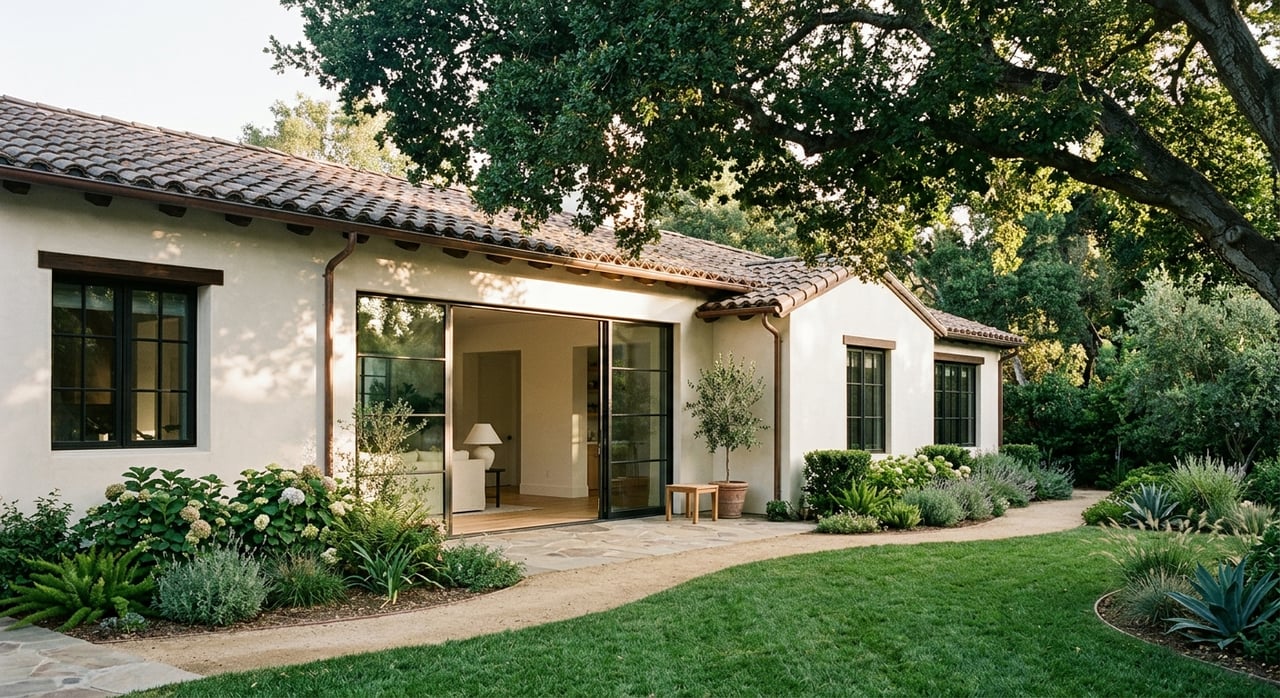
If your Alamo home feels too big, too busy, or too costly to update, you are not alone. Many long-time homeowners reach a point where they ask the same question: should you renovate the home you love, or sell and move into something easier to manage? In a market as valuable and unique as Alamo, the right answer depends on more than emotion alone. This guide will help you weigh cost, taxes, timing, and lifestyle so you can make your next move with clarity. Let’s dive in.
Why this decision is different in Alamo
Alamo is not an average housing market. Census data shows a 91.8% owner-occupied rate, about 25.0% of residents age 65 and older, and median owner-occupied home values above $2,000,000. Zillow’s April 30, 2026 home value index places the average Alamo home at $2,585,369, while Redfin reported a March 2026 median sale price of $3,125,000.
That matters because your decision is likely tied to a high-value asset with a long ownership history. In many cases, you are not just comparing floor plans or finishes. You are comparing tax consequences, maintenance demands, and whether a move truly improves your day-to-day life.
Start with your real goal
Before you compare bids or tour smaller homes, get clear on what is driving the decision. Some homeowners want less upkeep. Others want a better layout, more accessibility, or a fresher look without leaving a familiar location.
A simple way to start is to ask yourself a few direct questions:
- Is your current home larger than you need?
- Are stairs, outdoor maintenance, or unused rooms becoming a burden?
- Do you still love the location and lot?
- Would a remodel solve the problem, or only improve the appearance?
- Do you want a simpler lifestyle more than a different house?
Your answers help separate a cosmetic want from a true housing need. That is important, because in Alamo, both renovating and downsizing can be expensive moves in different ways.
When renovating may make more sense
Renovating often makes sense when you still love where you live and the home itself has good long-term potential. If the structure is sound, the lot works for your needs, and the changes are targeted, staying put can preserve stability and avoid the disruption of moving.
For many Alamo owners, there is another major factor: property taxes. California property taxes are based on assessed value at acquisition, and the California Board of Equalization says a change in ownership generally increases property taxes when the current market value is higher. That means keeping your home can help you preserve a favorable tax base, depending on the type of work you do.
Renovation can work well if you want to preserve your tax position
Not all projects are treated the same way. The Board of Equalization says routine maintenance is generally not considered new construction. For example, replacing a shake roof with a tile roof is not treated as new construction.
But many additions and improvements can trigger reassessment for the value they add. The Board of Equalization notes that items such as patio covers, pools, spas, decks, sunrooms, and flatwork may be reassessed to the extent they increase value. A full tear-down and rebuild is generally fully reassessed at current market value.
Renovation can make sense if the location still fits
If your lot, street, and setting still work for you, renovating may be the better answer than starting over somewhere else. That is especially true if the main issues are layout, finishes, or outdoor usability rather than the broader location itself.
In Alamo, larger lots can also bring another layer of planning. Contra Costa Fire’s Wildfire Prevention Unit oversees weed abatement, defensible space guidance and inspections, home hardening, and AB38 real-property-transfer inspections during sales. In practical terms, exterior upgrades, landscape cleanup, and sale readiness can overlap, so improvements should be planned thoughtfully.
Know the permit path before you commit
In unincorporated Contra Costa County, building and planning approvals go through the county’s Department of Conservation and Development using its ePermits system. Common permit categories include ADUs, grading, home-improvement permits, pools and spas, solar, and demolition.
That is why the safest order is usually simple: confirm the jurisdiction, verify whether permits are required, determine whether the work counts as maintenance or assessable new construction, and only then decide how much to spend. A renovation budget should not assume every dollar spent will translate neatly into resale value or tax treatment.
When downsizing may make more sense
Downsizing can be the right move when your home no longer matches your daily life. If you are maintaining rooms you rarely use, managing a yard that feels like a chore, or living in a layout that no longer feels easy, a smaller home may provide real relief.
The key is to test whether the move actually improves your finances and lifestyle. In the San Ramon Valley, downsizing may reduce square footage and maintenance more than it reduces cost.
A smaller home may not mean a dramatically cheaper home
Nearby market data helps set expectations. Realtor.com shows San Ramon with a median listing home price of $1.388 million, 205 active listings, and about 23 days on market. Redfin reports Danville with a March 2026 median sale price of $1,892,000 and a 14-day median market time.
Compared with Alamo, those figures suggest that moving to a smaller home nearby may lower upkeep, but it may not create as much savings as people first expect. If your goal is financial simplicity, you will want to compare not only price but also property taxes, insurance, maintenance, and monthly ownership costs.
Taxes can change the math quickly
For long-time owners, one of the biggest downsizing questions is whether a move resets the property tax basis. The Board of Equalization says a higher current market value at a change in ownership generally increases property taxes. It also notes that supplemental assessments are issued when a property changes ownership or new construction is completed.
That does not mean downsizing is off the table. It means the tax side should be part of the decision from the beginning, not an afterthought at the end.
Prop 19 may help eligible homeowners
For many California downsizers, Prop 19 is the rule to understand. The Board of Equalization says eligible homeowners age 55 or older, severely and permanently disabled owners, or victims of wildfire or natural disaster may transfer their base-year value to a replacement primary residence anywhere in California, subject to value and timing rules.
If the replacement home costs more, the excess value is added to the transferred base-year value. This can be a meaningful planning tool, but the details matter, so the timing and price of both properties should be reviewed carefully.
Sale proceeds may not equal spendable proceeds
If you sell, the top-line sale price is only part of the story. You also need to factor in moving costs, transaction costs, the cost of preparing the home for sale, and your future monthly ownership expenses.
There may also be capital gains considerations. The IRS says a primary residence sale may exclude up to $250,000 of gain for single filers or $500,000 for joint filers if the ownership and use test is met. Losses on personal-use property are generally not deductible.
A practical way to compare both paths
If you are torn, put both options on paper. A side-by-side comparison often turns an emotional choice into a clearer strategic one.
Here is a simple framework to use:
| Question | Renovate and Stay | Sell and Downsize |
|---|---|---|
| Does the location still work for you? | Best if yes | Less important |
| Will the project require permits? | Often yes | Not applicable before purchase |
| Could the work trigger reassessment? | Possibly, if it is new construction | Change in ownership usually resets tax basis unless an exclusion applies |
| Will maintenance become easier? | Maybe, depending on scope | Often yes if the replacement home is truly simpler |
| Is disruption short term or long term? | Construction disruption now | Moving disruption, then a new routine |
| Could monthly costs improve? | Sometimes | Depends on purchase price, taxes, and ownership costs |
This kind of comparison helps you focus on outcomes, not just appearances. A beautiful remodel does not always solve a lifestyle problem, and a smaller home does not always create meaningful savings.
Timing matters in today’s Alamo market
Market timing should also shape your decision. Zillow reported 41 homes for sale and 20 new listings in Alamo at the end of April 2026. Redfin reported a 12-day median market time in March 2026.
That points to a market with limited inventory and relatively fast turnover. If you are leaning toward selling, homes that are clean, well-presented, and priced close to market may have stronger buyer response than homes that need major work.
For homeowners considering both options, this matters in a practical way. If your home would show well with focused preparation rather than a major remodel, selling first may be worth serious consideration. If the home needs substantial work to compete well, then renovating for your own long-term use may be the better path.
Signs your best move is to renovate
You may be a strong candidate for renovating if:
- You want to stay in Alamo and still enjoy your location
- Your home’s structure works, but the finishes or layout need improvement
- You want to avoid the disruption of moving
- Preserving your current tax base is important
- The planned work is targeted, permitted properly, and financially sensible
Signs your best move is to downsize
You may be a strong candidate for downsizing if:
- You are maintaining more home than you use
- Accessibility or ease of living is becoming more important
- Outdoor upkeep feels like a burden
- You want a simpler monthly routine, even if costs do not drop dramatically
- A replacement home would better match how you live now
The smartest next step
In Alamo, this is rarely a purely financial decision and rarely a purely emotional one. It is usually a mix of both. The best choice comes from understanding your tax position, the permit and reassessment issues tied to renovations, and the true cost of replacing your current home with something smaller.
A well-planned move starts with honest numbers and a realistic picture of your options. If you are weighing whether to improve your current home or position it for sale, the right local guidance can help you compare both paths with confidence.
If you are thinking about your next step in Alamo, Joujou Chawla can help you evaluate renovation, preparation, timing, and sale strategy with the kind of local insight that makes a major decision feel much more manageable.
FAQs
How do property taxes affect a downsize decision in Alamo?
- California property taxes are generally based on assessed value at acquisition, and a change in ownership usually increases property taxes when current market value is higher, unless an exclusion such as Prop 19 applies.
What renovation projects in Contra Costa County may trigger reassessment?
- The Board of Equalization says new construction can be assessable, and items like patio covers, pools, spas, decks, sunrooms, and flatwork may be reassessed to the extent they add value, while routine maintenance is generally not treated as new construction.
Where do Alamo homeowners check permits for renovation projects?
- In unincorporated Contra Costa County, building and planning approvals go through the Department of Conservation and Development, which uses an ePermits system for common permit categories.
How fast is the Alamo housing market right now?
- Redfin reported a 12-day median market time in March 2026, and Zillow reported 41 homes for sale with 20 new listings at the end of April 2026, suggesting limited inventory and relatively quick turnover.
Can Prop 19 help older homeowners downsize in California?
- The Board of Equalization says eligible homeowners age 55 or older, severely and permanently disabled owners, or victims of wildfire or natural disaster may transfer their base-year value to a replacement primary residence anywhere in California, subject to the law’s value and timing rules.