If you want East Bay access without giving up hills, trails, and a quieter residential setting, Orinda tends to stand out fast. It offers a mix that can be hard to find: a small city feel, a strong single-family home base, and direct BART access that keeps the rest of the Bay Area within reach. If you are wondering what daily life here actually feels like, this guide will walk you through the setting, the housing, the downtown rhythm, and the lifestyle patterns that shape Orinda. Let’s dive in.
Orinda feels tucked away, but connected
Orinda sits east of the Berkeley Hills, and city materials describe it as a rural community with hilly oak woodlands and multiple creek tributaries. That description lines up with how many people experience it day to day: more hillside and open-space oriented than dense or urban.
At the same time, Orinda is not cut off. The city’s history points to the Caldecott Tunnel and the 1973 opening of BART as key moments that made travel easier, with Orinda becoming the first BART stop after the tunnel. That gives the city a dual identity: tucked into the hills, but tied closely to the larger East Bay and San Francisco commute map.
The scale also shapes the experience. Orinda’s 2020 Census population was 19,514, which supports its reputation as a comparatively small East Bay community. In practical terms, that often means a more contained, residential feel rather than a fast-moving city atmosphere.
Daily life is shaped by trails and hills
One of the clearest things about living in Orinda is that outdoor access is not just an extra. It is part of the city’s everyday pattern. Orinda was designated a Trail Town USA in 1996, and the city highlights several trail connections that start in or pass through town.
The de Laveaga Trail begins downtown and connects to regional trails. The EBMUD trail at Wagner Ranch links to the American Discovery Trail, and the St. Stephen’s pedestrian and bicycle trail connects Orinda to the Lafayette Reservoir area. EBMUD also owns about 27,000 acres in the East Bay hills and offers more than fifty miles of trails on its land.
That matters because it changes the way the city feels. In Orinda, ridge walks, hikes, and trail runs are woven into the landscape rather than reserved for occasional weekend drives. Nearby regional recreation adds to that pattern, including Sibley Volcanic Regional Preserve, where staging areas in Orinda provide access to trails including the East Bay Skyline National Recreation Trail.
Open space is built into the residential pattern
Wilder is one of the best examples of how open space and housing come together in Orinda. According to the city, the subdivision spans more than 1,500 acres, but home sites are clustered within about 200 acres, with 245 home sites total and more than 1,300 acres of open space.
That setup helps explain something broader about Orinda’s character. Even where newer housing has been added, the city still tends to preserve a trail-adjacent, open-space-oriented way of living. If you value room to breathe and easy access to the outdoors, that is a meaningful part of the appeal.
The downtown core is small, useful, and walkable
If you are asking whether Orinda is walkable, the best-supported answer is yes, in specific areas. The most walkable daily-use zone is the downtown and BART core, where planning efforts have focused on streetscape improvements and pedestrian connections.
The city’s planning documents also show that its bicycle, trails, and walkways system was designed to connect residential areas with public transportation, parks, regional trails, schools, and downtown. That does not make all of Orinda urban or sidewalk-oriented, but it does mean the core plays an important role in everyday convenience.
Orinda Station is at 11 Camino Pablo and is served by BART’s Antioch to SFIA/Millbrae line. The station includes parking, bike access, restrooms, and County Connection service. For many residents, that transit access is central to the city’s appeal because it pairs residential hillside living with a direct rail option into Oakland, San Francisco, and Walnut Creek.
Theatre Square gives downtown its social rhythm
The clearest focal point downtown is Theatre Square. Downtown Orinda describes it as a mixed-use center anchored by the historic Orinda Theatre, with a broad mix of dining options and plenty of patio and al fresco seating.
This is where Orinda’s evening life becomes easiest to picture. Rather than a big nightlife district, the city offers a more relaxed routine where you can park once, walk between restaurants, shops, and the movie theatre, and call it a night. That small-scale convenience is a big part of Orinda’s charm.
The Orinda Theatre itself is a local landmark. Its official history says the Modern Baroque theatre was designed by Alexander Aimwell Cantin and opened on December 27, 1941. After a preservation effort, it reopened in 1989, and a two-screen movie palace wing was added in 1996.
Housing in Orinda is mostly detached homes
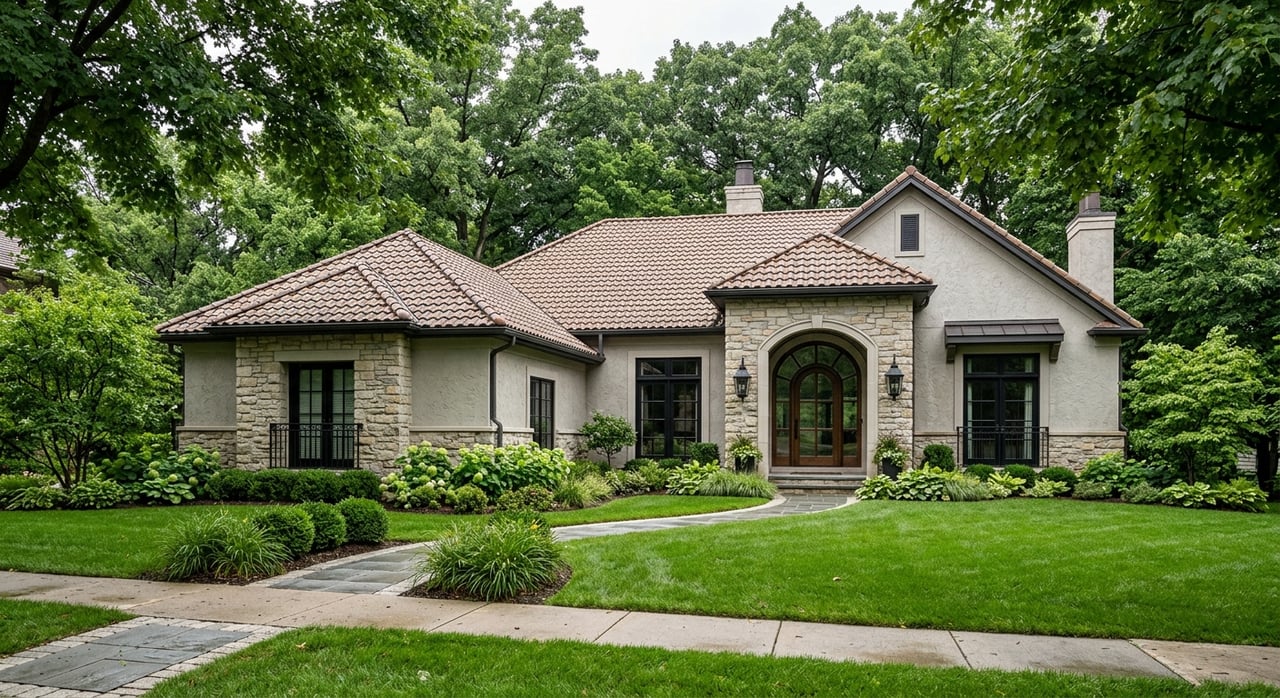
If you are picturing Orinda as a single-family-home market, that is accurate. The city’s housing element says about 93% of housing units are single-unit detached, about 5% are multifamily, and roughly 90% of households are owner-occupied.
That data supports what many buyers notice right away. Orinda has a strong detached-home profile, and ownership is a major part of the city’s housing pattern. It is not a place defined by high-rise living or a large rental inventory.
You will also see variety within that overall theme. Some homes are older and established in hillside settings, while places like Wilder show a newer master-planned version of Orinda living. The city is also slowly broadening its housing mix through downtown planning and mixed-use or multifamily rezoning, but detached homes still dominate the landscape.
Expect a high-price East Bay market
Orinda sits in the high-price tier of the East Bay. Census QuickFacts places the median value of owner-occupied housing units at $1.804 million for the 2019 to 2023 period.
More recent market snapshots point to a low-to-mid $2 million range. Redfin reported a median sale price of $2.3 million in March 2026, while Zillow showed a median list price of $2.07 million and Realtor.com reported a median listing price of about $2.05 million.
Those numbers are not identical because they measure different things, but the overall picture is consistent. If you are considering Orinda, it helps to approach it as a market where detached homes, limited scale, and strong owner occupancy all support higher price points.
What makes Orinda distinct in the East Bay
Orinda’s appeal is not just one feature. It is the combination of several. You get a semi-rural hillside setting, a robust trail network, a compact downtown with real local identity, and BART access that keeps the region connected.
That combination is what makes the city feel different from denser parts of the East Bay. The setting is more residential and open-space oriented, but you still have a defined town center and a practical transit link when you need it.
For some buyers, that balance is the whole point. If you want a place that feels calmer and more tucked into the landscape, but still works for Bay Area routines, Orinda makes a compelling case.
Who tends to appreciate living in Orinda
Orinda often appeals to people who want detached housing, a quieter setting, and daily access to trails and open space. It can also be a strong fit if your routine benefits from BART access, but you do not want to live in a denser urban environment.
It may be especially appealing if you value a small downtown over a large commercial district. Theatre Square, the Orinda Theatre, and the downtown core offer useful gathering places, but the city’s identity remains centered on residential living rather than nonstop activity.
That said, expectations matter. If you want a highly walkable citywide grid or a broad multifamily housing mix, Orinda may feel more limited. If you are looking for hillside scenery, detached homes, and a trail-connected lifestyle with regional access, it tends to align much more closely.
If you are weighing Orinda against other East Bay communities, the details matter. The right fit often comes down to how you want your home, commute, and daily routine to work together. If you want help evaluating that balance and finding the right property strategy, connect with Joujou Chawla for thoughtful guidance grounded in East Bay market expertise.
FAQs
Is Orinda walkable for daily errands and dining?
- The most walkable part of Orinda is the downtown, BART, and Theatre Square core, while much of the broader city is more car- and trail-oriented.
What types of homes are most common in Orinda?
- Orinda is dominated by detached single-family homes, which make up about 93% of housing units, with a smaller multifamily presence.
How expensive is the Orinda housing market?
- Recent market snapshots place Orinda in the low-to-mid $2 million range, with median values and listing or sale prices generally clustering around that level.
What is the lifestyle like in Orinda compared with denser East Bay cities?
- Orinda offers a smaller, more residential feel shaped by hills, trails, open space, a compact downtown, and direct BART access.
What makes Orinda feel distinct as a place to live?
- Its strongest lifestyle mix is a semi-rural hillside setting, a connected trail network, a compact downtown anchored by Theatre Square and the Orinda Theatre, and regional transit access through BART.