By Joujou Chawla
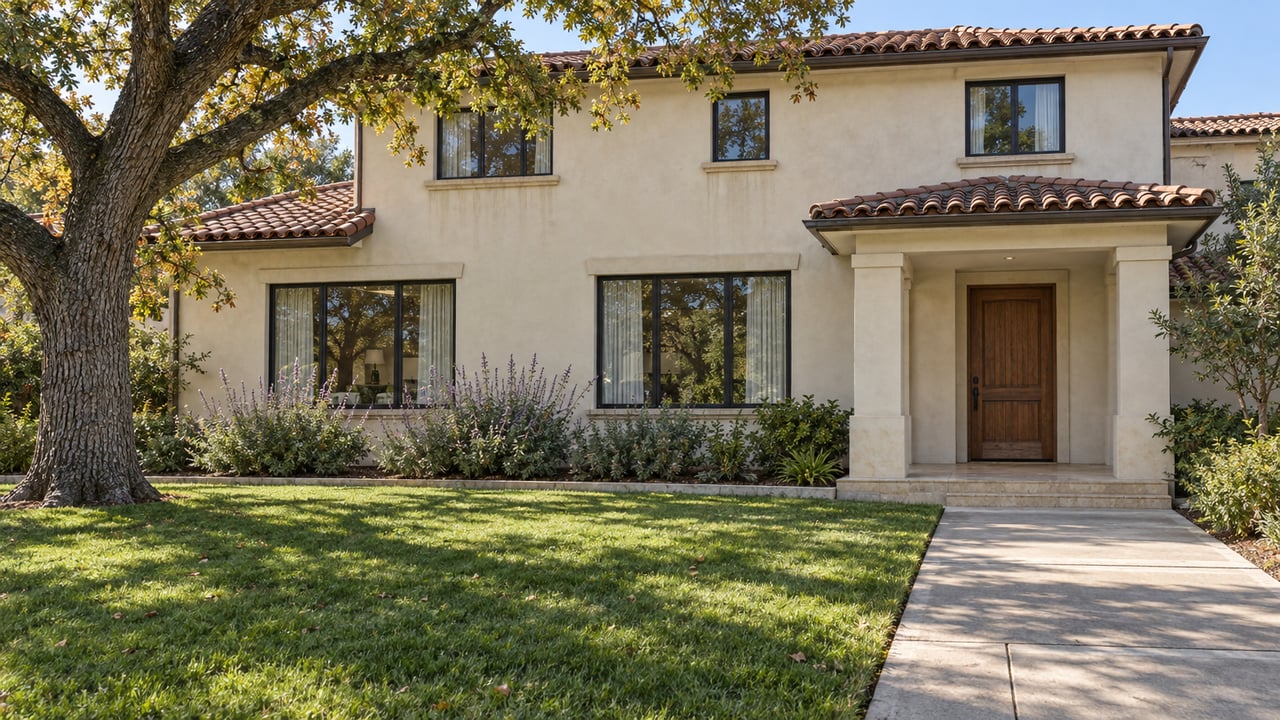
Alamo, CA real estate investment requires a specific frame of reference to evaluate correctly. This is not a market for buyers seeking short-term cash flow or rapid appreciation plays. Alamo is a wealth-preservation market that has historically delivered steady long-term value appreciation driven by structural supply constraints, large-lot zoning, and persistent demand from a community with a firmly established place in the Bay Area's residential hierarchy.
Key Takeaways
- Alamo's supply constraint is structural, not cyclical; the community is almost entirely built out, zoning mandates minimum half-acre lots, and new master-planned development is effectively absent, creating conditions that support long-term value retention
- Large lots in Alamo create meaningful ADU potential that is increasingly being realized by owners seeking to improve total property yield without selling
- Alamo functions as a wealth-preservation real estate market rather than a cash-flow market, with the investment thesis centered on long-term appreciation, Proposition 13 tax base accumulation, and land scarcity
- The Alamo real estate market's historically low transaction volume and high percentage of sales above list price reflect genuine scarcity-driven demand rather than speculative pressure
The Supply Constraint Argument
The most durable investment argument for Alamo real estate is supply constraint. Contra Costa County zoning mandates minimum half-acre residential lot sizes, and the community is fully built out with no meaningful new master-planned development. Active inventory at any given time is structurally low, typically 30 to 50 homes across the entire community regardless of interest rate cycles or broader Bay Area market conditions.
This constraint does not guarantee prices rise in any given quarter. It means the conditions for significant price deterioration are structurally limited in a way that more transactional markets are not. Demand is driven by high-income professionals, long-term estate buyers, and Bay Area equity purchasers whose commitment to Alamo's specific lifestyle is relatively insulated from economic cycles.
What Drives Alamo's Structural Supply Constraint
- Contra Costa County zoning mandating minimum half-acre residential lots, preventing the dense subdivision development that has changed comparable communities elsewhere in the Bay Area
- A fully built-out community with extremely limited remaining buildable land
- Unincorporated status placing development decisions at the county level, where the regulatory environment has historically favored preservation of large-lot character over densification
- A buyer profile of long-term estate purchasers rather than speculative investors, reducing transaction velocity and keeping inventory structurally limited even in softer periods
Large Lots and ADU Potential
Alamo's minimum half-acre lot standard is a direct investment attribute. California's ADU legislation has expanded the ability of residential property owners to add accessory dwelling units, and Alamo's large lots are among the most favorable in the Bay Area for ADU development. A well-designed ADU can generate meaningful monthly income while adding square footage that contributes to resale value.
Alamo is not a cash-flow rental market — entry prices and rental rates do not produce the yield ratios of investment-grade rental properties. An ADU bridges that gap by creating income from land the owner already controls, without the transaction costs of a separate acquisition.
How Alamo's Large Lots Create ADU Investment Value
- Minimum half-acre lots provide the physical footprint for meaningful ADU development that smaller-lot Bay Area communities cannot accommodate at the same scale
- California's expanded ADU legislation has reduced regulatory barriers, making Alamo's large-lot inventory increasingly relevant to income-producing real estate strategies
- A well-designed ADU adds rental income potential and permanent square footage that contributes to resale value
- The ADU strategy lets owners improve total yield without selling
Proposition 13 and the Tax Base Advantage
Proposition 13 caps annual assessed value increases at 2 percent per year from the purchase date, meaning long-term Alamo holders accumulate a tax base that can run dramatically below current market value over time. For buyers who intend to hold for a decade or more, this compounding benefit represents a structural financial advantage specific to California real estate.
Under Proposition 19, eligible holders 55 or older can transfer their accumulated tax base to a replacement property anywhere in California. For earlier-stage buyers, the benefit reinforces the hold-rather-than-trade investment thesis that characterizes Alamo at its most effective.
How Proposition 13 Benefits Long-Term Alamo Real Estate Holders
- Annual assessed value increases capped at 2 percent from the purchase date, creating a growing gap between assessed and market value in an appreciating market
- Long-term holders accumulate tax bases reflecting original purchase prices rather than current market values, often well below what a new purchaser would pay
- The tax base represents a compounding benefit that reinforces the hold-rather-than-trade thesis for buyers planning to remain in the property
- Proposition 19 allows eligible holders 55 or older to transfer their accumulated tax base to a replacement property anywhere in California
The Wealth-Preservation Investment Profile
Alamo real estate investment is best understood as wealth preservation rather than wealth creation through cash flow. The community's profile resembles other fully built-out, zoning-protected luxury enclaves in major metros — high entry cost, effectively fixed supply, and demand driven by buyers placing preserved capital rather than speculating on price movement.
The buyers who do best in Alamo understand the time horizon and the lifestyle-investment integration that makes it different from a pure investment vehicle.
What Distinguishes Alamo as a Wealth-Preservation Market
- A buyer demographic insulated from economic cycles: high-income professionals, equity purchasers, and estate buyers whose demand is tied to Alamo's specific lifestyle attributes rather than to market momentum
- A physical scarcity, where the land is finite, the zoning protects large-lot character, and the community is built out
- A lifestyle infrastructure that sustains demand across market cycles
- A resale market driven by genuine buyer competition for limited inventory rather than speculative enthusiasm, which has historically produced more durable long-term values
FAQs
Is Alamo, CA real estate a good investment for buyers focused on rental income?
Alamo is not the right market for buyers whose primary objective is near-term rental yield. Entry prices and rental rates do not produce the yield ratios of income-focused investment properties. The Alamo investment thesis centers on long-term appreciation, Proposition 13 tax base accumulation, and ADU income on large lots.
What Alamo neighborhoods tend to hold value most reliably?
Westside Alamo, Stonegate, and The Trails have historically been among the most resilient sub-areas, reflecting lot sizes, open space proximity, and established housing stock. White Gate and Bryan Ranch offer elevated terrain and Mount Diablo views that attract buyers with strong long-term community commitment.
How does the Alamo market compare to Danville from an investment standpoint?
Alamo and Danville serve different investment profiles. Danville offers more entry points, more product variety, and stronger transaction volume. Alamo offers larger lots, more structural supply constraint, and estate-scale character that appeals to buyers placing larger capital concentrations. The right choice depends on financial position, time horizon, and lifestyle priorities.
Contact Joujou Chawla Today
Alamo, CA real estate investment requires a specific kind of local expertise, from understanding the sub-area dynamics and the ADU development landscape on specific lot configurations to the HOA structures of Alamo's gated communities and the off-market transaction culture that characterizes a meaningful share of Alamo's activity. I specialize in this market and bring that knowledge to every buyer conversation.